

AT A GLANCE
Student voice matters because young people need opportunities to practice speaking clearly, listening to others, presenting ideas, and disagreeing respectfully. These communication skills build confidence and prepare students for classrooms, careers, leadership, and civic life. If students spend years learning that staying quiet is safer than speaking up, that habit can follow them into adulthood.
- AT A GLANCE
- Knowing the Answer Is Not the Same as Communicating It
- The Habit of Staying Quiet Can Follow Students Into Adulthood
- Schools Should Prepare Students for More Than Tests
- AI Makes Human Communication More Important, Not Less
- How Schools Can Help Students Find Their Voice
- A Student’s Voice Gets Stronger by Using It
Schools are under enormous pressure to produce measurable results. Reading levels, math scores, assessments, and academic rankings all matter.
But in the effort to measure what students know, we risk paying too little attention to something else they will need for the rest of their lives: the ability to express what they know.
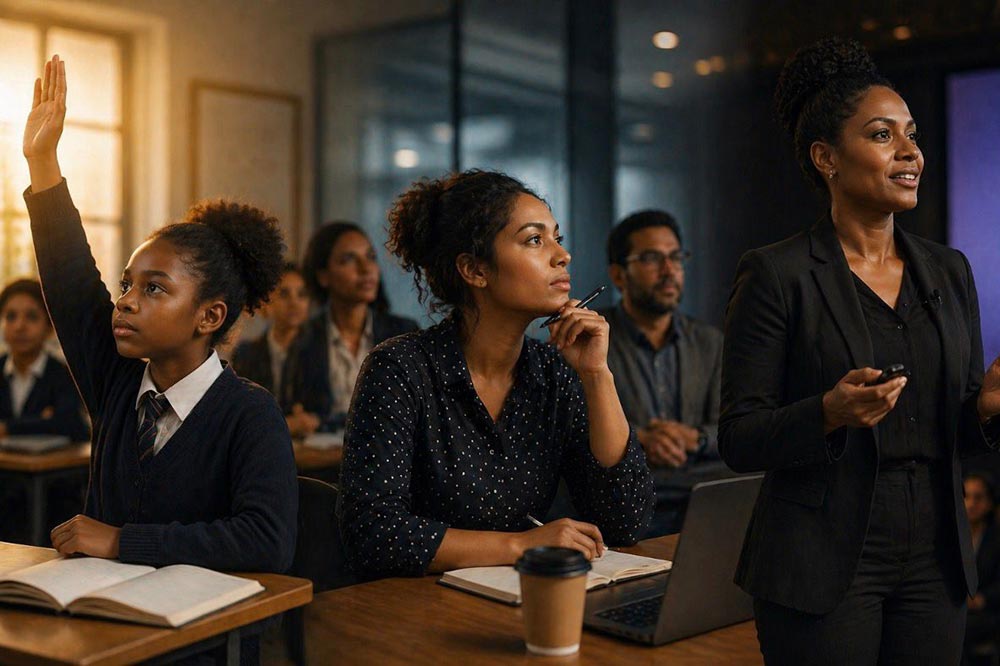
A student may understand the lesson and still be afraid to raise a hand. They may have a good idea but struggle to explain it in front of others. They may know the answer but remain silent because speaking feels riskier than staying quiet.
That matters far beyond the classroom.
Why Student Voice in Schools Matters
For decades, schools have offered activities that naturally gave students opportunities to use their voices.
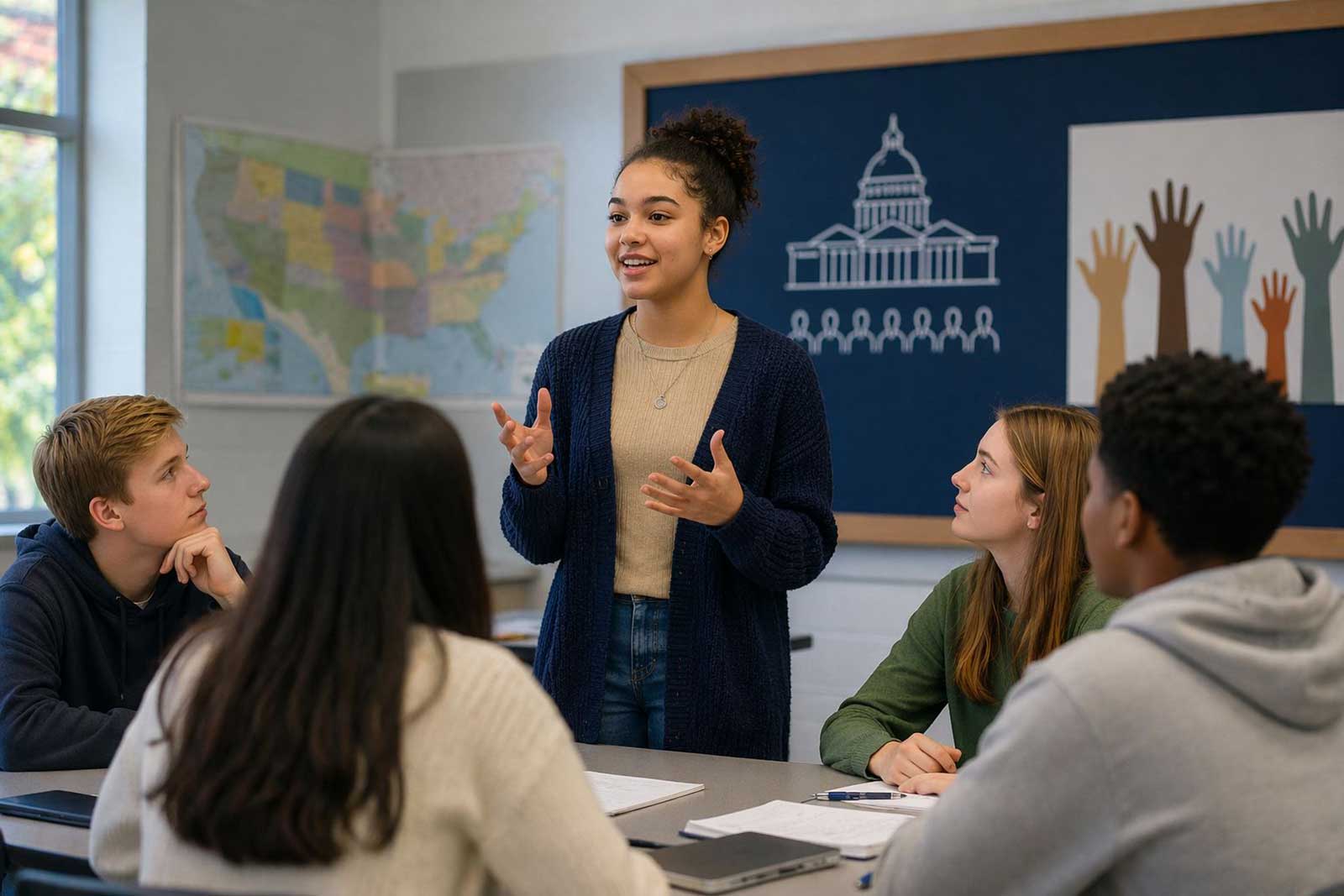
Debate teams, theater programs, speech competitions, presentations, classroom discussions, and student leadership all required young people to do something important: stand in front of other people and communicate.
Students learned to organize their thoughts. They learned how to explain an idea, listen to another point of view, answer a question, and respond when someone disagreed.
They also learned something that cannot be taught through a worksheet:
You can have an idea, say it out loud, and survive the discomfort of being heard.
That experience builds confidence.
Not the confidence of always being right, but the confidence to participate.
Knowing the Answer Is Not the Same as Communicating It
Academic knowledge matters. Students need to read, write, calculate, analyze, and understand the subjects they study.
But knowing something and communicating what you know are different skills.
A student can write an excellent answer on a test and still struggle in a job interview years later. Another may understand a complex subject but freeze during a presentation. Someone can have a thoughtful opinion but never learn how to defend it respectfully when challenged.
Communication improves through practice.
Students need opportunities to stand up, organize what they think, express it in their own words, listen to other people, and respond in real time.
The classroom is one of the safest places to begin learning how.
The Habit of Staying Quiet Can Follow Students Into Adulthood
When students repeatedly discover that silence is easier, they can begin carrying that lesson with them.
Don’t ask the uncomfortable question.
Don’t disagree.
Don’t volunteer.
Don’t risk giving the wrong answer.
Stay quiet and let someone else speak.
Those habits do not automatically disappear at graduation.
They can show up later in university classrooms, job interviews, meetings, presentations, leadership roles, and public life.
The young person who never became comfortable expressing an idea can become the professional who has something valuable to contribute but says nothing during the meeting.
That is why communication confidence should not be treated as a personality trait that some students simply have and others do not.
It is a skill that can be developed.
Schools Should Prepare Students for More Than Tests
There is also a larger reason student voice matters.
Democracy depends on people who know how to participate.
Citizens need to be able to ask questions, evaluate competing ideas, explain what they believe, listen to people who disagree with them, and challenge leaders when necessary.
None of this requires everyone to agree.
In fact, disagreement is part of democratic life.
The important skill is learning that disagreement does not have to become hostility.
A student who has practiced discussing ideas, listening carefully, and responding respectfully is learning more than public speaking. They are learning how to participate in a world where other people will not always think as they do.
Those habits begin early, and they are learned through experience.
AI Makes Human Communication More Important, Not Less
Students are also growing up in a world increasingly shaped by artificial intelligence.
AI can already help generate text, summarize information, organize ideas, and prepare presentations. Those capabilities will continue to change education and professional life.
But easier access to answers makes another skill more valuable: being able to understand an idea and express it in your own words.
Students still need to explain what they think. They need to answer questions they were not expecting. They need to defend an argument, listen to another person, and respond without a tool generating the next sentence for them.
Technology can assist communication.
It cannot replace the experience of learning to trust your own voice.
How Schools Can Help Students Find Their Voice
Schools do not need to redesign education completely to create more opportunities for student voice.
They can begin with simple things: more classroom presentations, structured discussions, debate, theater, student leadership, group problem-solving, and opportunities for students to explain their reasoning instead of only selecting an answer.
Teachers can also create environments where getting something wrong is not treated as humiliation.
Students need to discover that speaking is not only something you do when you are absolutely certain. Sometimes you speak to explore an idea, ask a question, test an argument, or understand another person’s point of view.
Debate matters. Theater matters. Speech matters. Presentations matter. Structured classroom discussion matters.
They give students repeated opportunities to build a skill they will use throughout their lives.
A Student’s Voice Gets Stronger by Using It
At Speak Up! Stand Tall!, we believe confidence and communication are skills that grow through practice.
Students build confidence by using their voice: standing up, expressing an idea, listening, responding, making mistakes, trying again, and gradually becoming more comfortable being heard.
The goal is not to turn every student into a professional speaker.
It is to help young people understand that their ideas have value and give them the communication skills to express those ideas when the moment comes.
Because schools are preparing students for more than the next test.
They are preparing them for interviews, universities, workplaces, leadership, relationships, communities, and public life.
A student who learns to trust their voice today is better prepared to use it when the room becomes bigger tomorrow.